
A mid sized enterprise looking to outsource a customer service function will typically end up working with a recruiter to find the operations leader who will own the relationship, a separate advisory firm to help structure the deal, a marketplace or referral network to find the actual BPO provider, and possibly a fourth party further down the line if an acquisition or investment ever comes into the picture. Four relationships, four onboarding processes, four sets of fees, and almost no shared context passed between any of them. We have watched that fragmentation play out from more than one seat at the table over the years, and it is genuinely expensive in ways that rarely show up on a single invoice.
The hidden cost of a fragmented market
When the firm that sourced a BPO partner has no visibility into the executive search process that placed the operations leader managing that relationship, nobody is positioned to notice when the leader's experience does not actually match the operating model of the partner they have been hired to manage. We have seen exactly that mismatch play out, and it is painful to watch unfold from a distance once it has already gone wrong. When the M&A advisor structuring an acquisition has no relationship with whoever vetted the target's delivery capability, valuation ends up resting on financial diligence alone, with operational risk assessed separately, late, or sometimes not at all.
Every one of these gaps is a place where risk hides quietly. Not because any individual firm did a bad job, but because nobody involved was positioned to see the whole picture. Specialists optimise for their own slice of the problem. Nobody is accountable for whether the slices actually fit together once the ink is dry.
What changes with a connected ecosystem
The thinking behind AnyBPO starts from a simple observation. The same underlying intelligence about what good BPO delivery actually looks like, what strong leadership in this industry actually does, and what a healthy BPO business actually looks like financially and operationally, is useful across all four of these problems at once. It should not need to be rebuilt from scratch by four different specialist firms who never talk to each other.
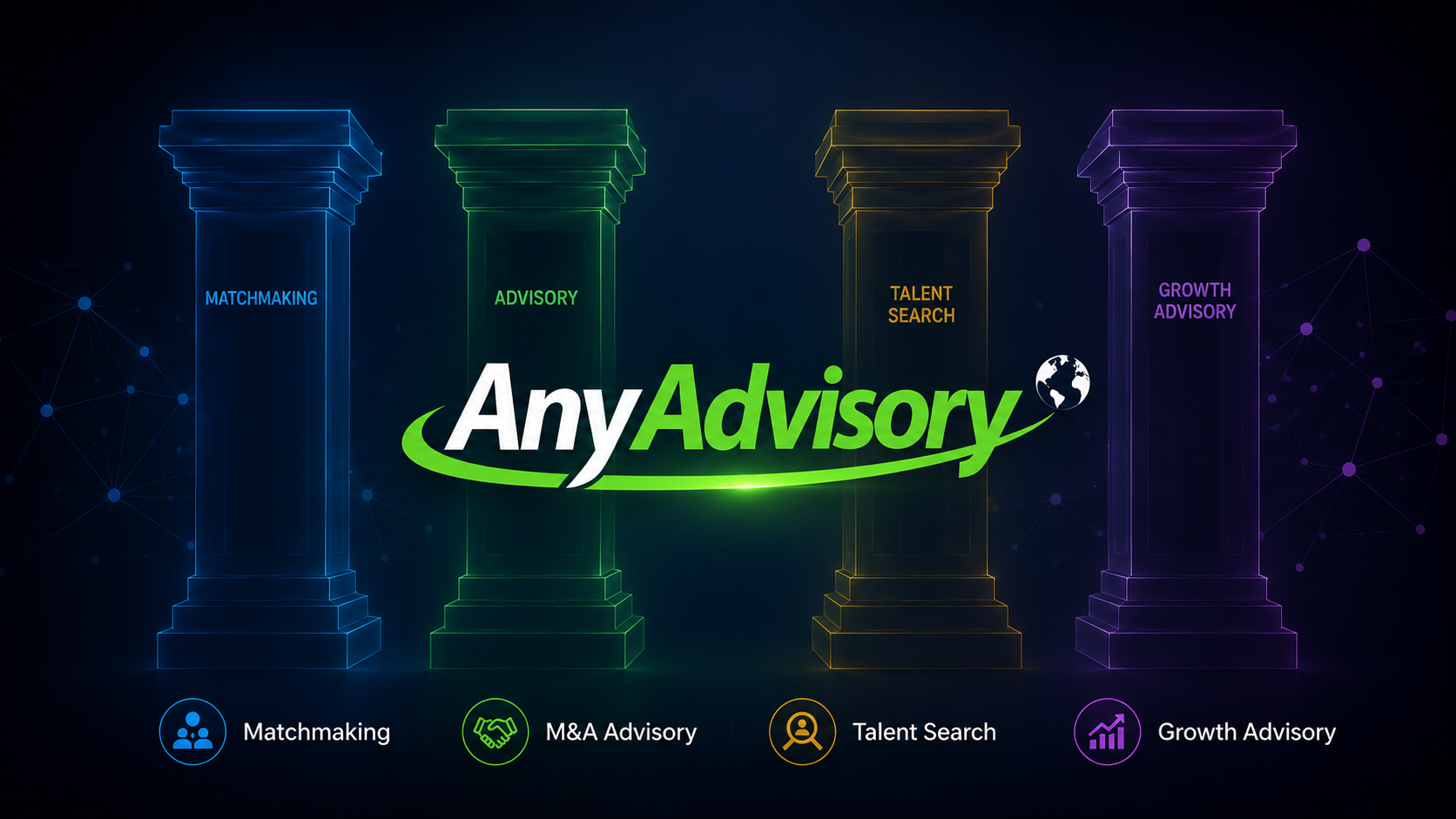
That is why AnyBPO runs as four connected pillars rather than four separate businesses. Global BPO matchmaking, M&A advisory, executive talent search and growth advisory all draw on the same vetted network, the same audit standards and the same operating intelligence, built from the combined experience of our team across large outsourcing programmes and the providers that actually deliver them.
In practice, this means an enterprise that comes to us to find a BPO partner is talking to a team that can also see whether the leadership hiring around that relationship needs attention, or whether a conversation about AI transformation should happen before the partnership is finalised, not after the fact. It means a BPO provider building toward an eventual sale has been part of a network that already understands its delivery quality, rather than starting that conversation from zero with a generalist advisor who has never run a delivery floor. It means an executive candidate stepping into a BPO leadership role is walking into an organisation whose operating model and partner
relationships are already understood by the same ecosystem, not a black box they have to map from scratch in their first ninety days.
Independent and vendor neutral, not just connected
Connection without independence would just be a more efficient version of the same conflict of interest that affects much of this market, where the firm recommending a partner is also being paid by that partner. Our audit and matching process is built to be vendor neutral specifically because trust is the actual product being sold here, more than the introductions themselves. A network of vetted partners across 45-plus countries only matters if the vetting is real, and it is only real if there is no commercial incentive anywhere in the chain to look the other way.
Why this matters more as AI reshapes the underlying market
As AI changes what a competitive BPO actually looks like, the businesses, leaders and investors who win will be the ones who can see across the whole picture at once: delivery capability, leadership quality, growth strategy and deal economics, rather than just one slice of it in isolation. The consolidation already running through this sector, driven by AI, margin pressure and shifting valuations rather than simple scale, is moving faster than a fragmented advisory market can keep pace with, because nobody at a fragmented table is incentivised to look past their own specialism.
A connected ecosystem can. That is the bet behind AnyBPO, and the more complex this industry becomes, the more it looks like the only model that actually fits it.
Want to see how the four pillars work together for your specific situation? Speak to an advisor https://www.anybpo.com/advisory