
The most popular advice about outsourcing customer service is wrong. The biggest provider isn't automatically the best provider, because the right fit depends on service complexity, geography, language coverage, technology, risk controls, speed of launch, and how much governance your team can manage. That's why the smartest companies that outsource customer service compare operating models, not just logos. The seven examples below show different answers to the same sourcing question, from global scale and multilingual delivery to Trust & Safety and partner selection. AnyBPO is relevant here as a vendor-neutral partner-selection resource, because its AnyMatch AI, audited provider network, and advisory services can help teams structure requirements and evaluate providers without turning the search itself into a full-time project.
Table of Contents
- 1. AnyBPO
- 2. Teleperformance
- 3. Concentrix, Including Webhelp
- 4. Foundever
- 5. TTEC
- 6. TaskUs
- 7. Alorica
- Top 7 Customer Service Outsourcing Providers Comparison
- Turn These Examples Into a Better Sourcing Decision
1. AnyBPO
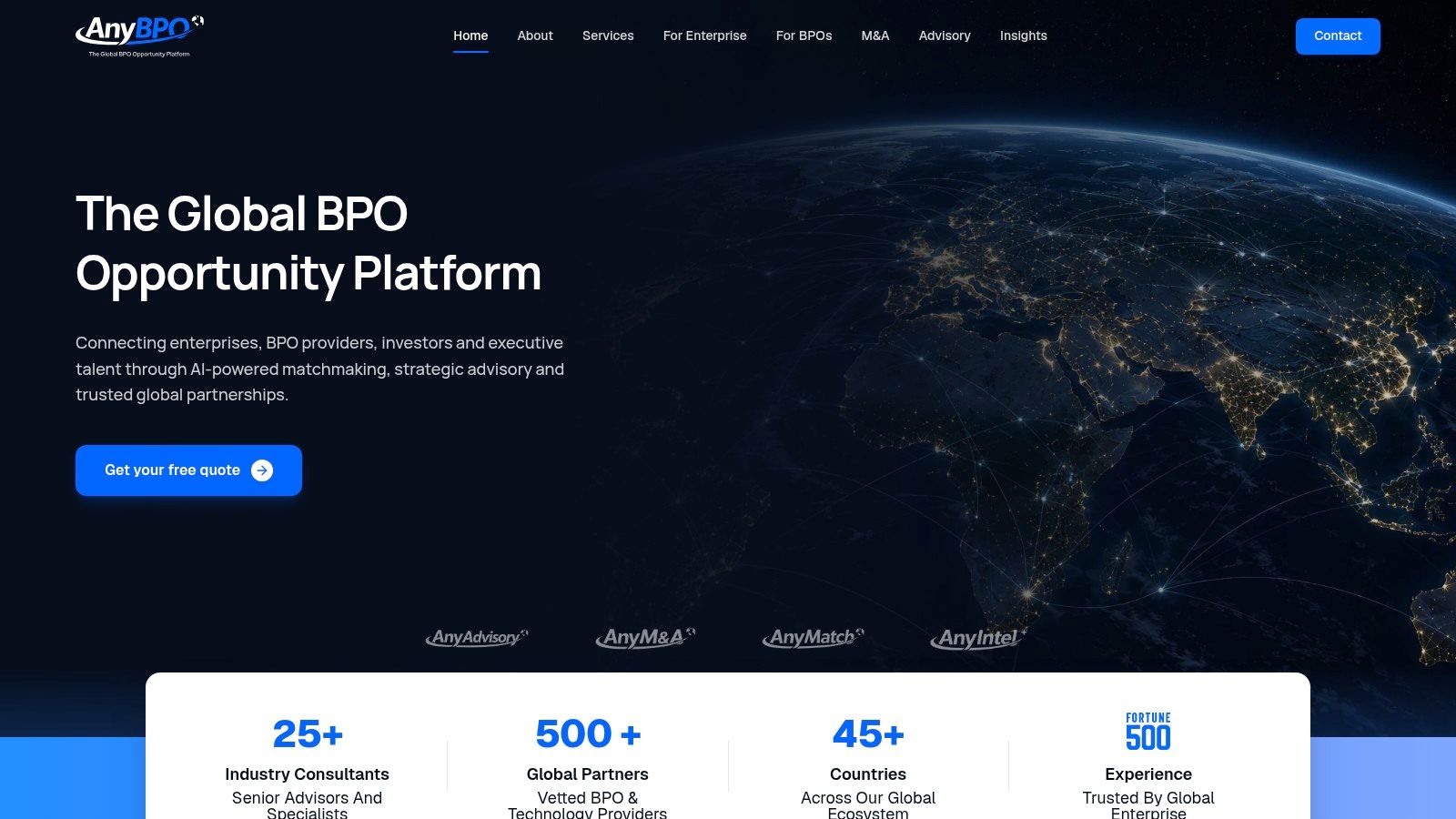
AnyBPO belongs in this list for a different reason than the other names. It isn't a contact center operator, it's a partner-selection platform for enterprises that need to reduce search noise, compare providers on structured criteria, and get from brief to shortlist faster. Its value is strongest when the outsourcing decision itself is messy, because the platform combines AI-assisted discovery with an audited network of 500+ vetted providers and coverage across 45+ countries.
Why it changes the sourcing equation
A lot of outsourcing projects fail before launch, not after. The team picks a provider on reputation, but the actual requirement mix, languages, tech stack, escalation rules, compliance needs, and launch speed were never formalized. AnyBPO's AnyMatch AI is designed to match providers by scope, location, team size, and tooling, which makes it useful when the sourcing brief is specific and the shortlist needs to reflect that specificity.
Strategic lesson: If the internal brief is vague, the search will be vague too. A structured matching layer helps teams compare on fit instead of on sales polish.
The other practical advantage is lifecycle coverage. AnyBPO's model spans AnyM&A, AnyIntel, and AnyConsult, so the same ecosystem can support market scanning, executive hiring, and transformation work after the sourcing decision is made. That matters for enterprises that don't just need a vendor list, but also negotiation support, leadership alignment, and implementation discipline.
Best fit and trade-offs
AnyBPO fits enterprise ops and CX leaders, BPO buyers and sellers, PE teams, and talent leaders who want independent support from requirements definition through post-selection optimization. The trade-off is simple, there's no public pricing and no off-the-shelf directory feel, so you'll need to engage an advisor to get a customized view. For teams trying to cut fragmented vendor search and long RFP cycles, that's the point.
Website: AnyBPO
2. Teleperformance
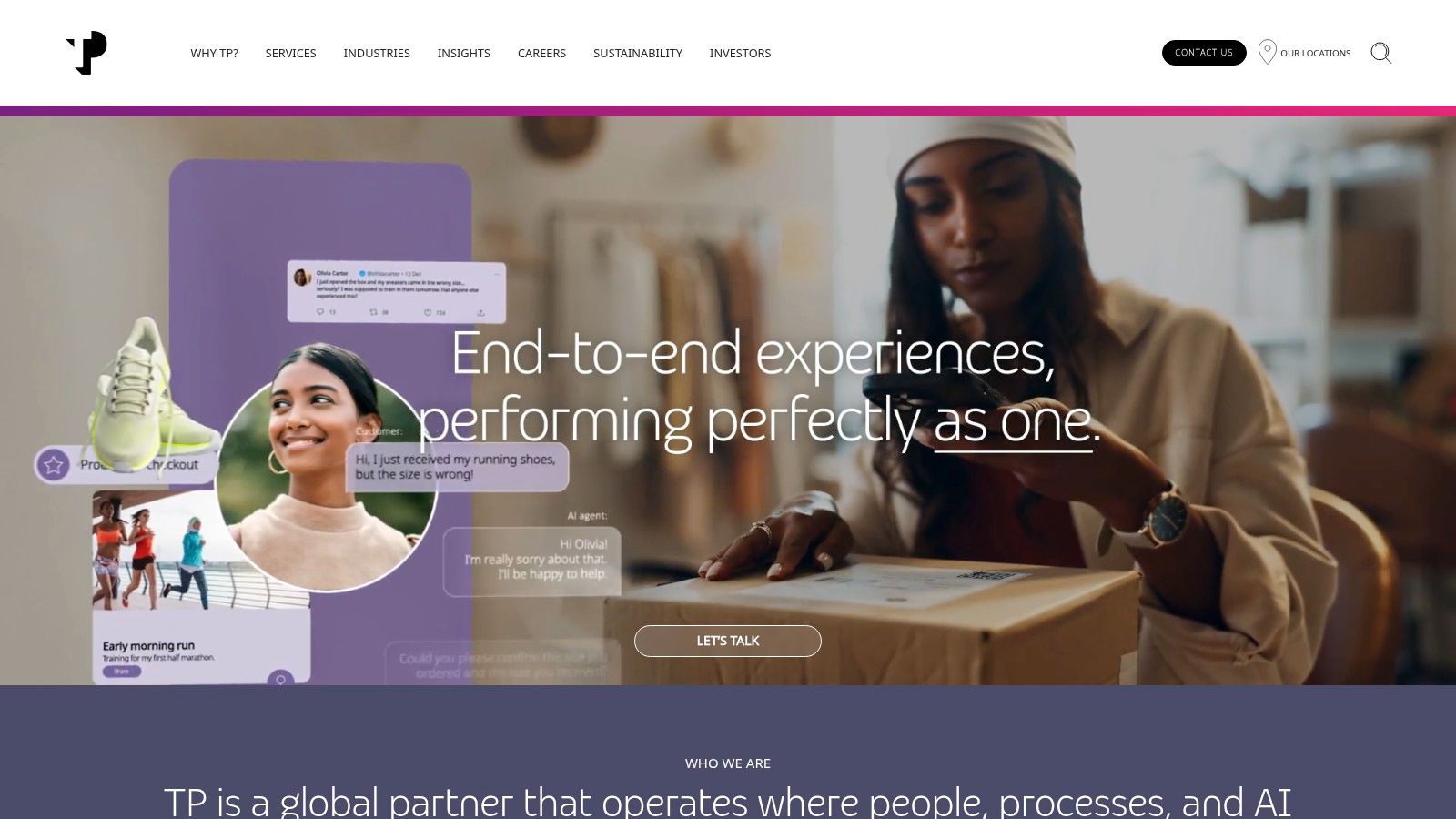
Few providers illustrate global scale as concretely as Teleperformance. It is built for enterprises that need multilingual coverage, large program rollouts, and a delivery model that can span voice, chat, messaging, and social without redesigning operations for each market.
The sourcing decision it answers
Teleperformance matters most when the question is whether one vendor can handle support across regions, languages, and channels at enterprise volume. Its footprint includes on-site, nearshore, offshore, and work-at-home delivery, so sourcing teams can align queues with time zones and labor pools instead of forcing every market into one model.
That fits a market where customer support outsourcing has become mainstream. Independent market research values the customer experience BPO market at USD 112.97 billion in 2025 and projects it to reach USD 296.29 billion by 2033, with North America at 35.9% revenue share in 2025 (Grand View Research). Teleperformance operates naturally in that kind of setting, where standardization and scale shape provider selection.
Operational strengths and trade-offs
Its TP.ai suite combines agent assist, analytics, and automation, which helps when a buyer wants productivity support layered on top of human service. The trade-off is that scale can feel less customized, especially for niche brands that want unusually flexible governance or a more individualized service model.
Geography strategy also matters. The right mix depends on whether a buyer prioritizes labor cost or closer time-zone alignment and service control, and AnyBPO's offshoring versus nearshoring guide offers a useful frame for that choice.
Central lesson: Use Teleperformance when the sourcing problem is breadth, coverage, and operating maturity, not artisanal customization.
Website: Teleperformance
3. Concentrix, Including Webhelp
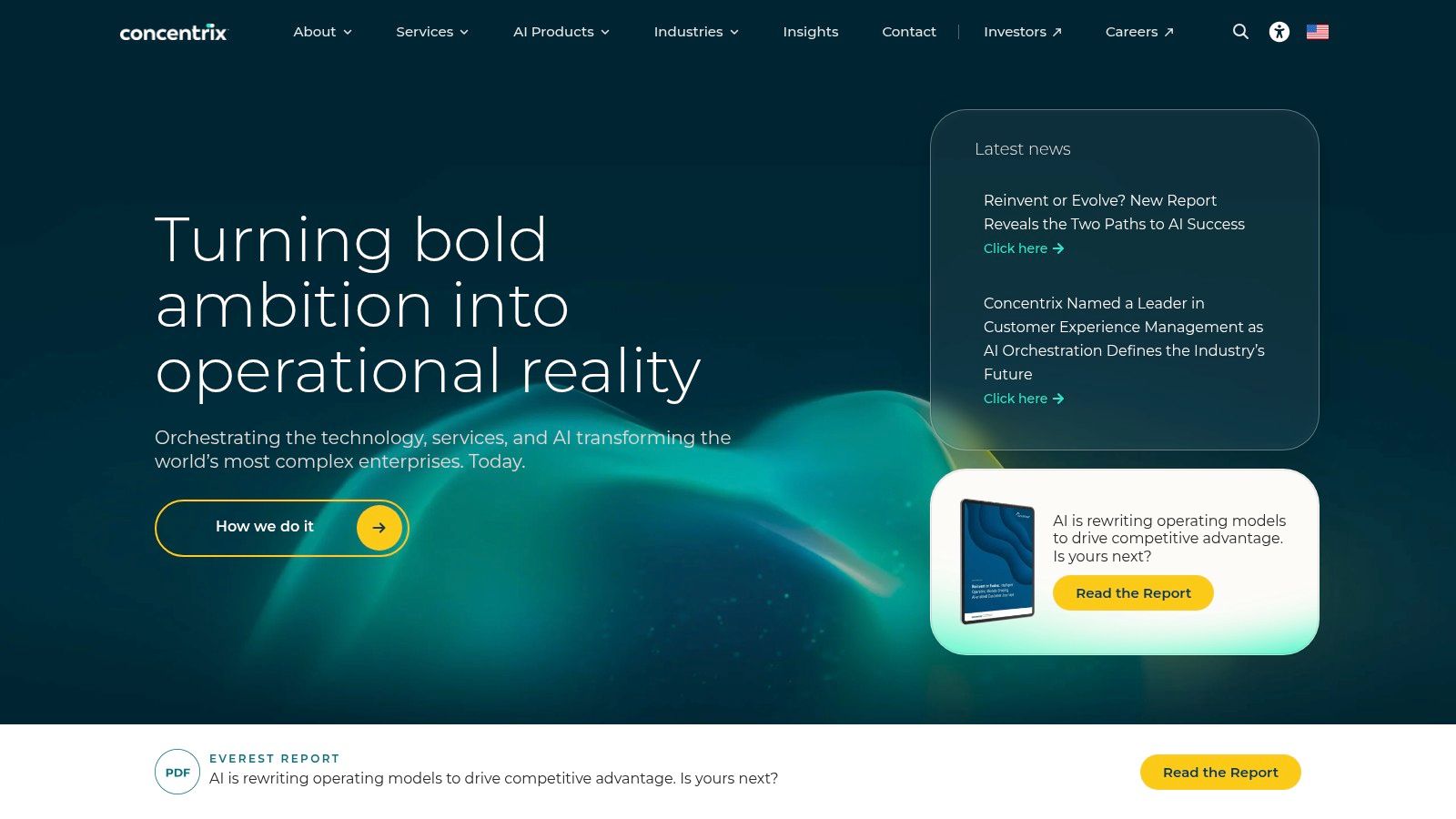
Concentrix makes sense for buyers that want AI-enabled enterprise CX without treating automation as a side project. The combination with Webhelp widened its global reach and increased the range of delivery patterns available to large brands, especially those that need multilingual service at scale.
What this model is good for
The most interesting part of Concentrix is the blend of human service and tooling. Its customer service stack includes generative AI and translation support for advisors, plus dedicated practices for customer care, technical support, and analytics. That makes it useful when a company wants to reduce friction in multilingual operations without losing human escalation capacity.
The operating lesson here is that technology transformation and outsourcing don't have to be separate decisions. If a buyer is also changing tools, workflows, or knowledge management, a provider like Concentrix can be better aligned than a pure labor supplier because the transition can include process and platform change together.
Where the risk sits
The biggest trade-off is integration complexity. After large combinations, region-level processes and tooling can differ more than buyers expect, which means governance matters more, not less. That's why procurement teams should ask how work is handed off across sites, how translation or AI assistance is supervised, and how much process variation the account team is willing to support.
Practical rule: Use Concentrix when you want outsourcing and transformation in one motion, then insist on clear governance so the tech layer doesn't outpace the service model.
For buyers mapping acquisition-led or integration-heavy sourcing, AnyBPO's mergers and acquisitions resource is relevant because vendor selection often overlaps with broader market consolidation and partner strategy.
Website: Concentrix
4. Foundever
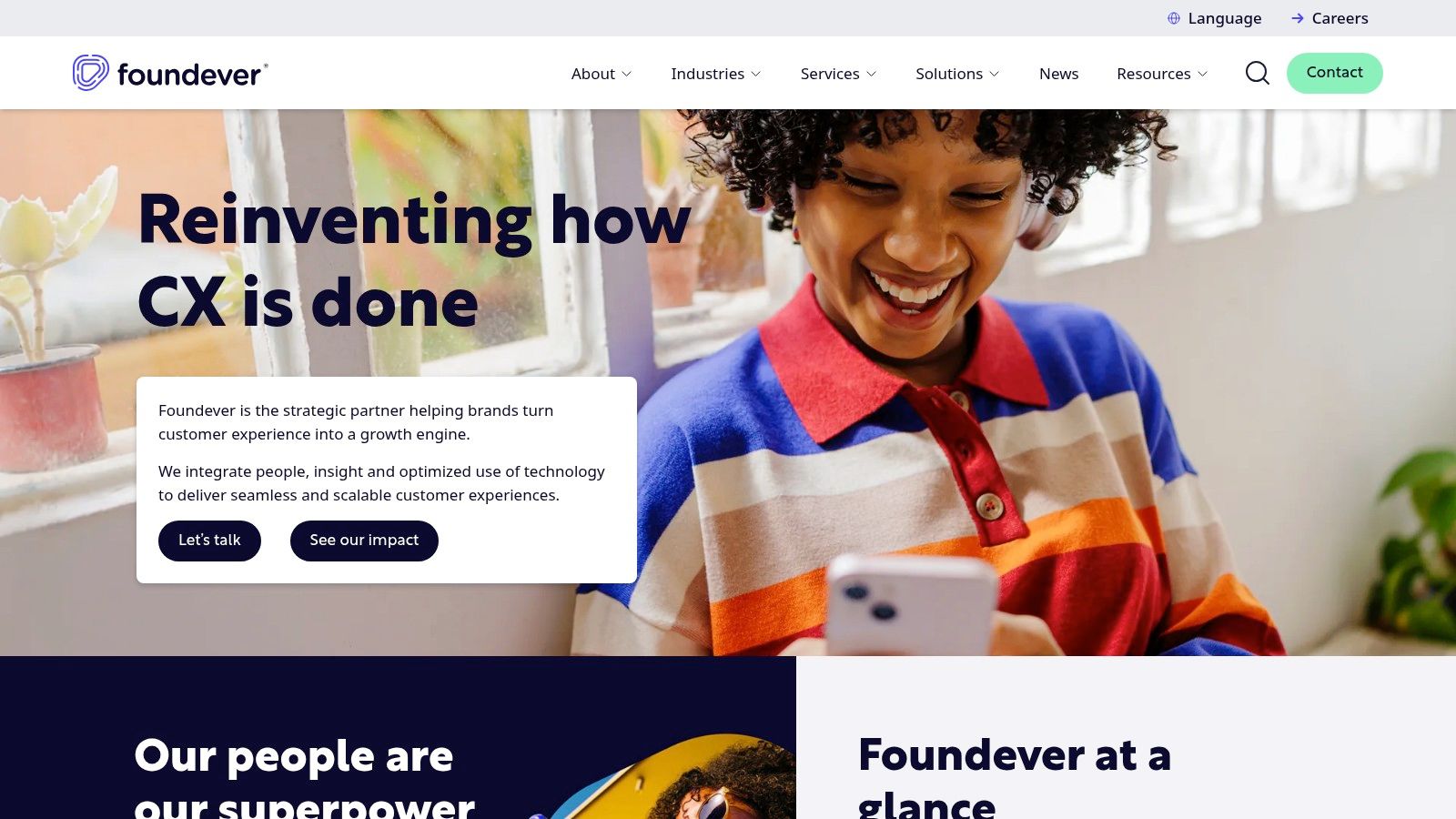
Foundever fits the sourcing brief when multilingual coverage is the main constraint. Its CX model spans on-site, hybrid, and work-at-home delivery, and language coverage is built into the operating model rather than added later.
Why language coverage drives the sourcing decision
Foundever's reported 60+ language capability matters because multilingual support is not just translation. It changes staffing plans, scheduling, quality checks, cultural fit, and escalation design. That makes it relevant for buyers that need follow-the-sun coverage or seasonal ramps across several markets.
The market context supports that reading. Industry analysis says 55% of companies already outsource at least part of their support operations and 47% plan to increase it, while in-house support costs around USD 22 per ticket in North America compared with USD 6 to USD 13 for outsourced Tier 1 support (Stealth Agents). For buyers already using a mixed model, multilingual delivery becomes a coverage decision first and a cost decision second.
Trade-offs buyers should watch
Scale can make consistency harder to manage. The more sites and languages a provider runs, the more buyers need to examine SOPs, QA routines, and escalation ownership. Foundever's breadth is useful only if the client team can keep standards aligned across locations.
Strategic lesson: Foundever is strongest when language coverage is central to the brief. Ask how quality is kept aligned across regions before assuming scale will hold the experience together.
Website: Foundever
5. TTEC
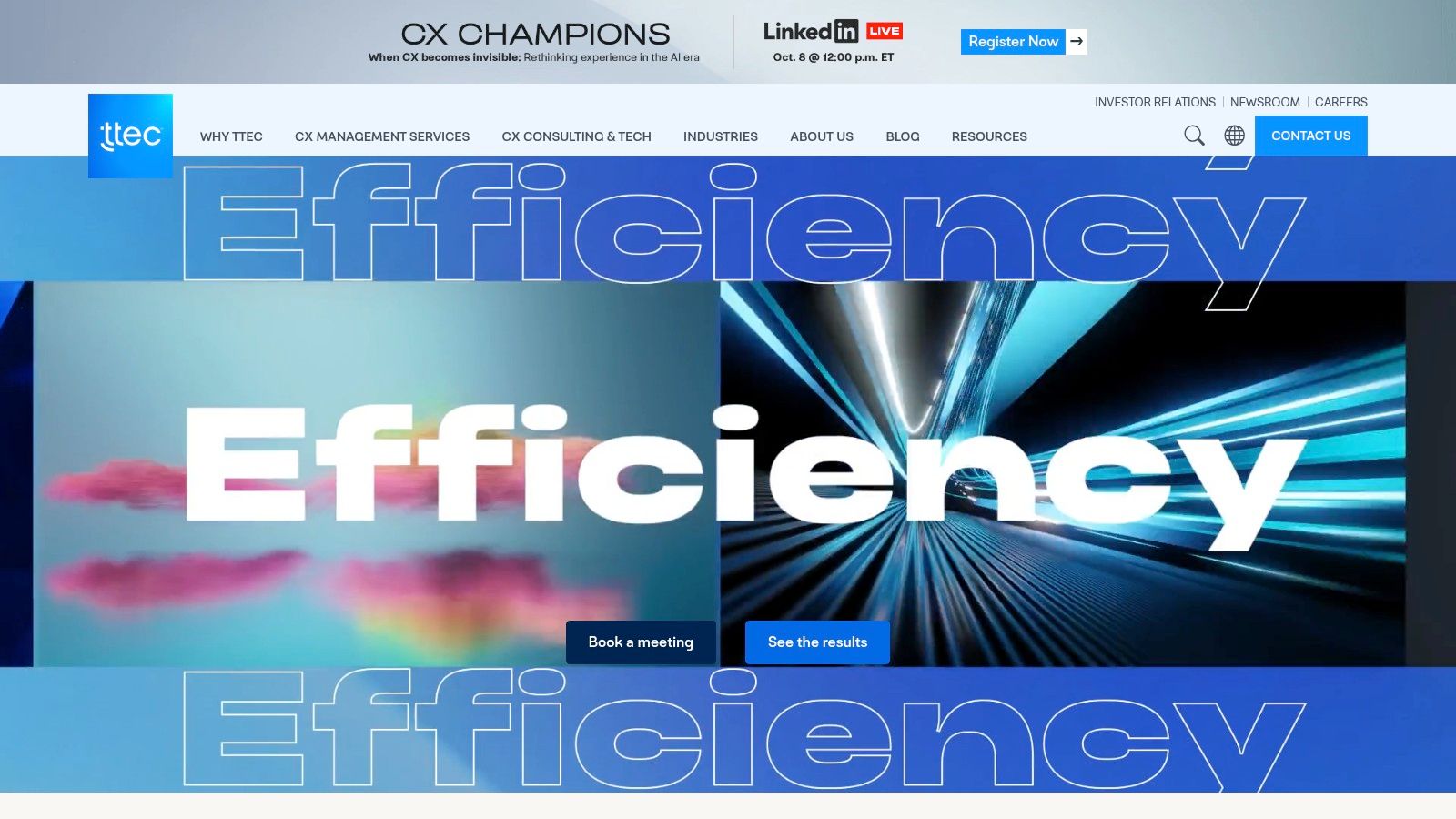
Technology-led modernization is where TTEC separates itself from pure labor suppliers. It combines outsourced operations with a substantial digital services arm, so the relevant question is whether a buyer wants help running the contact center, changing its stack, or both.
The model behind the fit
TTEC's design-operate-improve approach, along with its Humanify cloud platform and managed cloud contact center services, points to buyers that care about systems integration, analytics, and AI-assisted operations. That matters for organizations modernizing CX platforms while outsourcing daily work, because the provider can help carry the transition instead of merely inheriting it.
The efficiency angle is part of the case. An academic thesis examining outsourced customer-service operations found that average after-call work decreased by 20% over 2023 and average call length fell by 10% in the studied environment, using operational data such as call length, after-call work time, total contact volume, answer times, and first-time resolution (LUT publication). Those are the kinds of gains a technology-led outsourcing model should make possible when workflow discipline is built into the program.
When TTEC is the right choice
TTEC fits best when the current stack is fragmented, analytics are weak, or QA needs better instrumentation. If part of the modernization includes outbound or revenue-critical calls, see AnyBPO's guide to sales call centers for how that delivery model differs. The trade-off is onboarding complexity, especially in highly customized environments. The more systems a provider must connect, the more time and internal ownership the transition usually requires.
Central lesson: If you are modernizing the stack while outsourcing, choose a partner that can manage both layers, not one that treats technology as an afterthought.
Website: TTEC
6. TaskUs
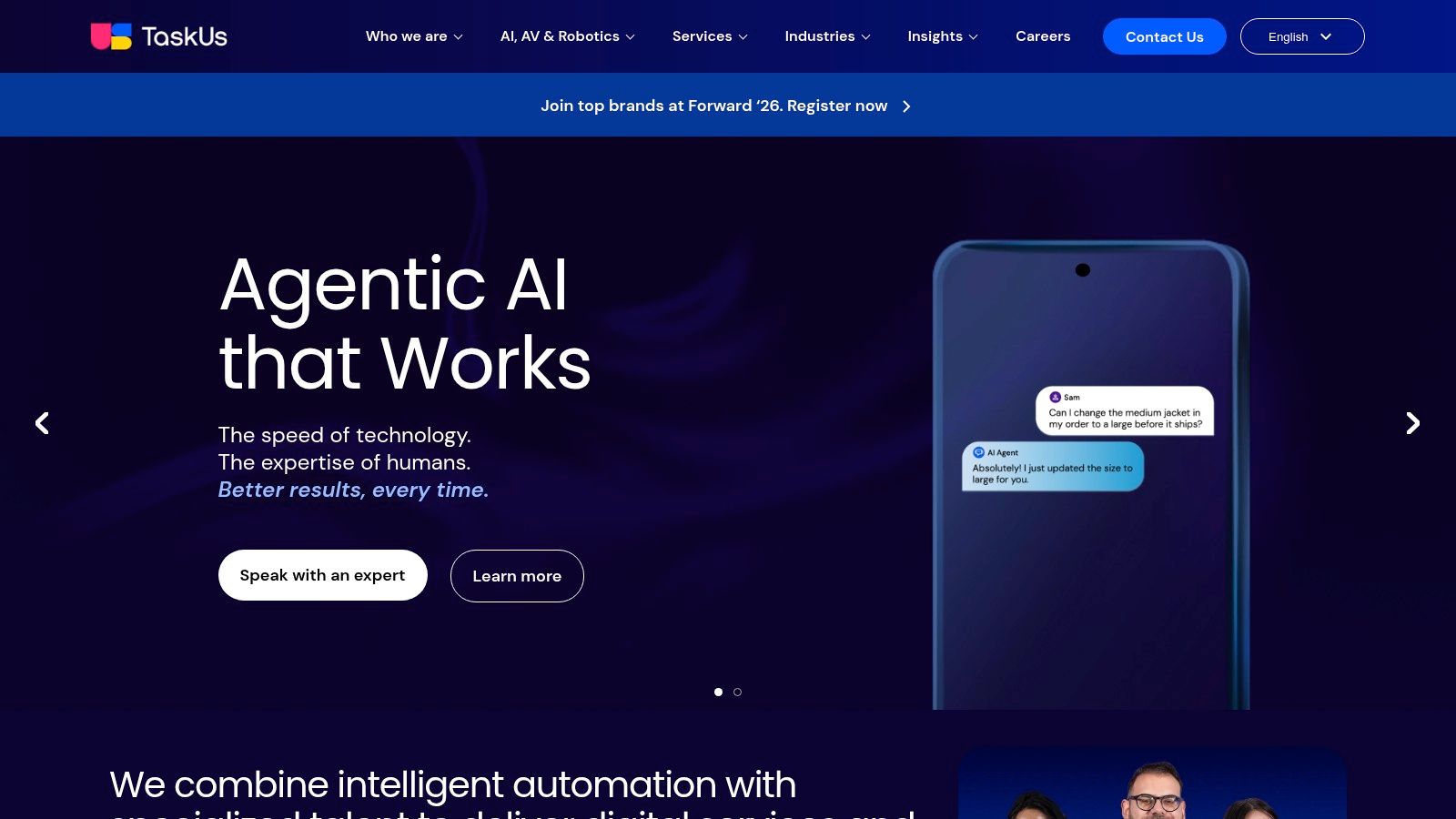
TaskUs stands out for digital-native agility and Trust & Safety depth. It's built for companies where customer support overlaps with platform integrity, content handling, community risk, or AI data operations.
Why this matters for digital brands
For marketplaces, social platforms, fintech products, and AI companies, customer service isn't isolated from the product. It's tied to moderation, fraud detection, abuse handling, data review, and model quality. TaskUs is relevant because its service model includes Trust & Safety programs and AI data services alongside core support, which is a more realistic fit for digital products than a generic call-center wrapper.
A recent outsourcing trends summary says companies are outsourcing for specialized talent and round-the-clock service, not only cost savings, and it notes that customer demand for immediacy remains intense (CallHounds). That dynamic helps explain why digital-native brands often want a partner that can launch quickly, operate globally, and handle complex edge cases without a long ramp.
Trade-offs and sourcing logic
TaskUs is not the default choice for low-complexity, transactional volume. It's aimed at more premium, high-judgement work, and that usually means the buyer is paying for specialization, not just seat count. The upside is that the same team can often support both customer-facing work and adjacent trust or AI functions, which reduces vendor sprawl.
Practical rule: Choose TaskUs when support, moderation, and AI operations overlap. If those functions live in separate silos, your outsourcing model is probably leaving risk on the table.
Website: TaskUs
7. Alorica
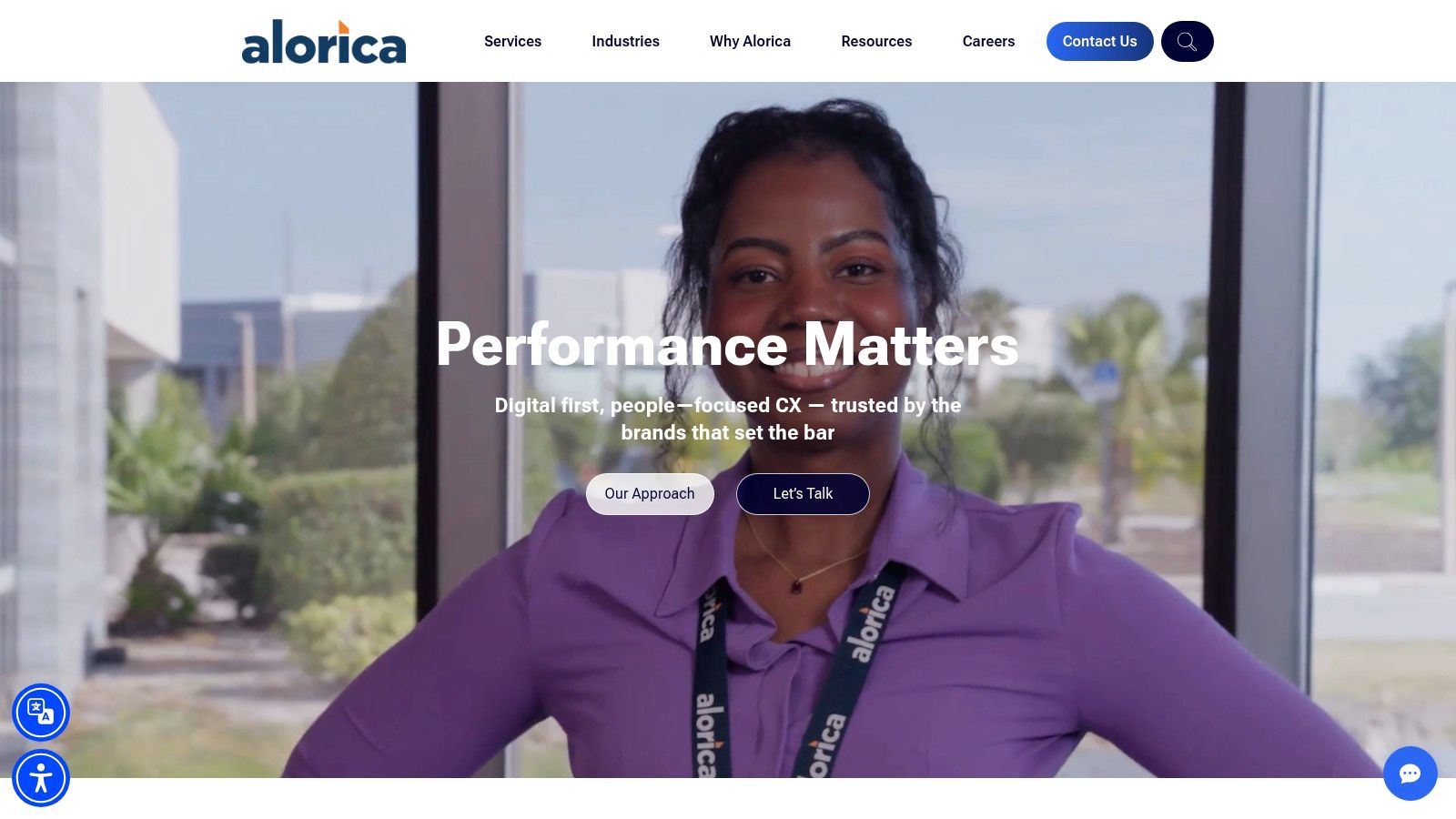
Alorica is the strongest example here for buyers who need broad omnichannel service plus a meaningful Trust & Safety layer. That combination matters for platforms and online communities where customer support and abuse mitigation sit closer together than traditional BPO models assume.
What the operating model signals
Alorica's mix of omnichannel care, specialized technical support, AI-enabled workflows, and formal Trust & Safety services tells you what kind of buyer it serves. This is a provider for organizations that need consistency across channels, but also need moderation, abuse mitigation, and security-aware operations to sit close to the service layer.
That's especially relevant because AI is changing the governance burden in outsourced support. Recent reporting says AI now handles a large share of routine interactions, while also warning that the more autonomy AI gains, the more human oversight it needs (Ringly). Alorica's emphasis on security and zero-trust architecture fits that shift, because automation without controls creates more risk than value.
Where it fits best
Alorica works well when a company wants broad CX coverage but also needs a partner that can support content moderation or abuse response under one operating umbrella. The downside is that custom statements of work can make commercial comparison less transparent, and global consistency still depends on how carefully the engagement is configured.
Strategic lesson: If your customer service environment includes policy enforcement, moderation, or abuse handling, don't split those responsibilities across disconnected vendors unless you have to.
Website: Alorica
Top 7 Customer Service Outsourcing Providers Comparison
| Provider | Implementation complexity (🔄) | Resource requirements (⚡) | Expected outcomes (⭐📊) | Ideal use cases (💡) | Key advantages (⭐) |
|---|---|---|---|---|---|
| AnyBPO | 🔄 Moderate, advisor‑led setup requiring stakeholder inputs | ⚡ Low–Moderate, platform handles discovery; client decisioning required | ⭐📊 Faster partner selection, reduced selection risk, accelerated time‑to‑value | 💡 Enterprise BPO sourcing, BPO M&A, executive search, transformation | ⭐ AI‑driven matching, audited 500+ partner network, end‑to‑end advisory |
| Teleperformance | 🔄 Low–Moderate, rapid large‑scale deployments; complex governance for niche needs | ⚡ High, global ops, security/compliance and integration demands | ⭐📊 High consistency and scale; faster resolution via TP.ai agent assist | 💡 Global multilingual CX, regulated industries, high‑volume programs | ⭐ Omnichannel scale, mature security/compliance, TP.ai analytics |
| Concentrix (incl. Webhelp) | 🔄 Moderate–High, post‑merger integration variability by region | ⚡ Moderate–High, regional process alignment and integration work | ⭐📊 Improved CSAT and handling time through AI + analytics | 💡 Brands needing AI‑enabled CX with expanded global capacity | ⭐ AI+human service blend, agile launch capability (The Nest), multilingual reach |
| Foundever | 🔄 Moderate, standardized playbooks but governance needed for consistency | ⚡ High, large multilingual footprint and distributed teams | ⭐📊 Strong multilingual coverage, follow‑the‑sun capacity and scale | 💡 Multilingual support, seasonal/scale programs, distributed workforce models | ⭐ 60+ language coverage, geographic diversity, security/compliance emphasis |
| TTEC | 🔄 High, tech consolidation and custom cloud/contact‑center integrations | ⚡ High, systems integration, managed cloud, analytics and AI investment | ⭐📊 Tech‑driven CX modernization with measurable operational gains | 💡 Organizations consolidating tech stacks and modernizing CX platforms | ⭐ Humanify cloud platform, strong systems integration and analytics bench |
| TaskUs | 🔄 Low–Moderate, agile, fast launches for digital‑native clients | ⚡ Moderate, specialized talent, Trust & Safety and AI/data pipelines | ⭐📊 Fast time‑to‑scale, robust Trust & Safety and AI data outcomes | 💡 Marketplaces, social platforms, fintech, AI/ML product companies | ⭐ Trusted Trust & Safety programs, AI data services, high‑growth agility |
| Alorica | 🔄 Moderate, standard CX deployments with security/compliance emphasis | ⚡ Moderate, AI workflows (Alorica IQ) and governance requirements | ⭐📊 Improved agent consistency and performance; Trust & Safety support | 💡 Platforms requiring content moderation, technical support, secure CX | ⭐ AI‑enabled workflows, formal Trust & Safety offerings, compliance focus |
Turn These Examples Into a Better Sourcing Decision
The right provider depends on the decision you're trying to make. If you need maximum global scale, Teleperformance is the clearest reference point. If multilingual delivery is the central requirement, Foundever is the most direct fit. If your customer service program needs AI-enabled enterprise CX, Concentrix is the better benchmark. If the primary objective is technology modernization plus outsourcing, TTEC deserves a close look. If your operation blends support, moderation, and AI data work, TaskUs is built for that overlap. If you need broad omnichannel service with Trust & Safety depth, Alorica belongs on the shortlist.
That comparison only works if the sourcing brief is specific. Before talking to vendors, document the service scope, channels, languages, locations, workforce model, technology integrations, compliance requirements, governance ownership, transition plan, measurement approach, and the level of commercial transparency you need. The more ambiguous the brief, the more likely the shortlist will be driven by branding instead of fit.
The operational reality is that outsourcing has become mainstream, not exceptional. One industry analysis says 55% of companies already outsource at least part of their support operations, while another market view shows customer experience BPO continuing to grow as an operating model rather than a tactical fix (Stealth Agents, Grand View Research). That means due diligence has to be sharper, not looser.
A better process starts with evidence-based supplier screening, then moves into governance design and post-launch optimization. For organizations that want independent support across requirements definition, partner evaluation, and implementation follow-through, AnyBPO's AnyMatch, audited partner network, and AnyConsult are relevant options.
If you're comparing providers for customer support outsourcing, AnyBPO can help you turn a messy vendor search into a structured decision. Its AI-powered matching, audited network, and advisory support are built for enterprises that want better fit, less selection risk, and cleaner implementation. Visit AnyBPO to see how it can support your sourcing process.